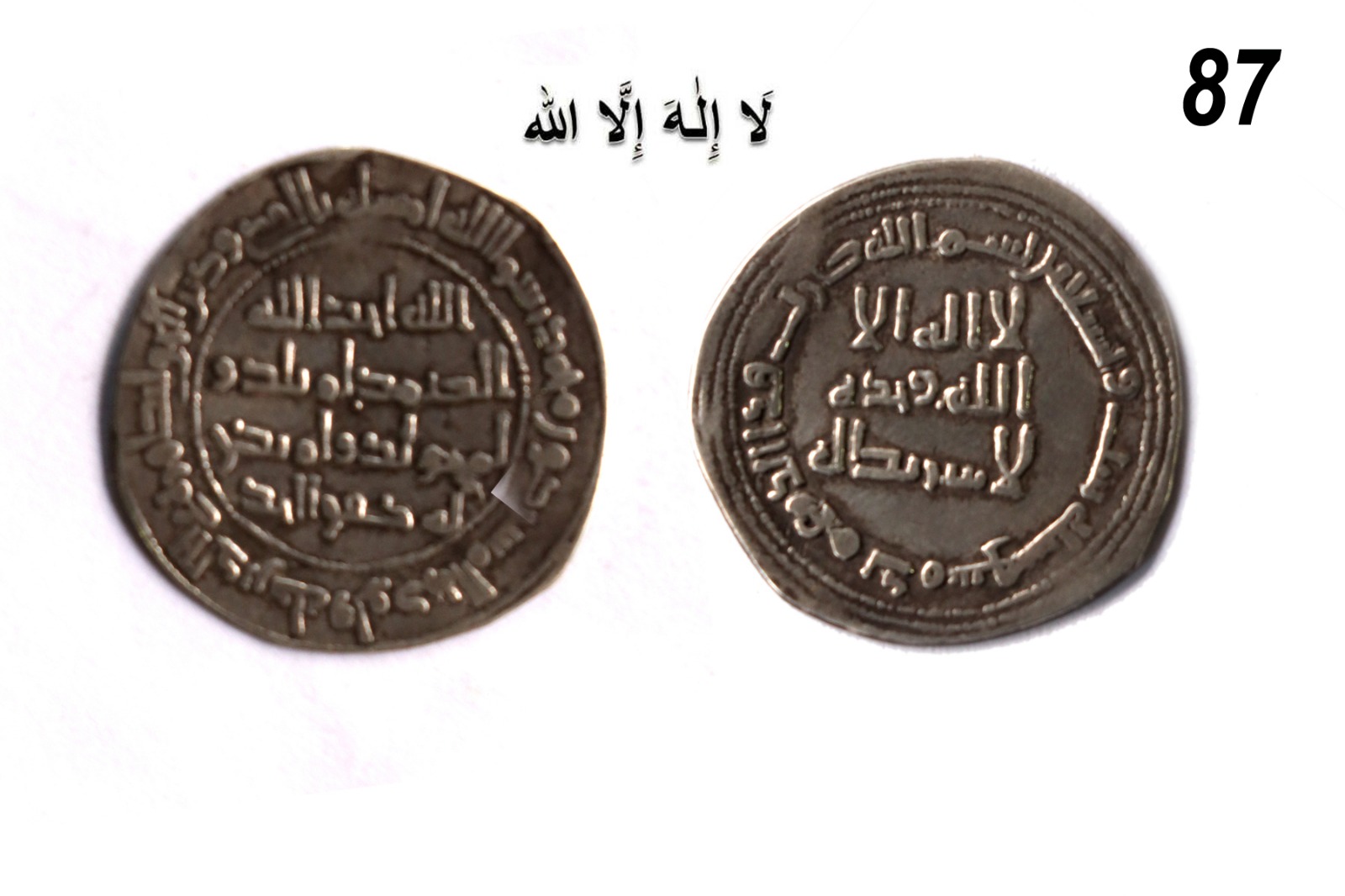
Hamid b. `Abd al-Rahman, who governed from AH 99 to 102 (AD 717-721).
Historical Significance of `Umar II’s Coinage
Caliph `Umar II was widely respected for his piety, justice, and reforms. His rule was marked by efforts to implement Islamic principles in governance, including fair taxation, improved administration, and economic policies that benefited the people. His coinage reflects this commitment to Islamic values, as his dirhams followed the established Umayyad design featuring religious inscriptions, avoiding images, and maintaining high purity.
Design and Inscriptions
The dirham maintains the classical Umayyad format, with Arabic inscriptions on both sides:
- Obverse: The Shahada (Islamic declaration of faith), emphasizing monotheism and the prophethood of Muhammad.
- Reverse: Quranic verses, the mint name (Wasit), the Hijri year (99 AH), and the name of the governor responsible for minting.
The annulet patterns (o o o o oo) add a unique artistic touch to the coin, distinguishing it from other dirhams of the time.
Minting Authority – Wasit Mint
Wasit, located in modern-day Iraq, was a crucial minting center during the Umayyad period. It played a significant role in producing high-quality silver dirhams used across the empire. Coins from this mint were widely circulated and are considered historically valuable due to their craftsmanship and consistency in weight and purity.
Numismatic Importance and Collector’s Value
Coins from `Umar II’s reign are highly sought after by collectors, historians, and numismatists. His reforms and policies made his rule stand out in Islamic history, making coins minted during his caliphate an essential part of early Islamic numismatic collections. Dirhams like this provide a glimpse into the economic, political, and religious aspects of the Umayyad dynasty.
Legacy and Preservation
This coin remains a valuable artifact, helping researchers and historians understand early Islamic governance, trade, and monetary systems. It is preserved under numismatic collections worldwide, ensuring that future generations can study the rich history of Islamic coinage.