- Introduction to the Umayyad Arab-Byzantine Coinage
The Umayyad Caliphate, under the rule of Abd al-Malik ibn Marwan (AH 65–86 / 685–705 CE), introduced a transformative phase in Islamic coinage. The Qinnasrin AE Fals, minted during this period, is a remarkable example of Arab-Byzantine coinage, reflecting the transition from earlier Byzantine influences to a distinct Islamic monetary system. - Historical Context and Importance
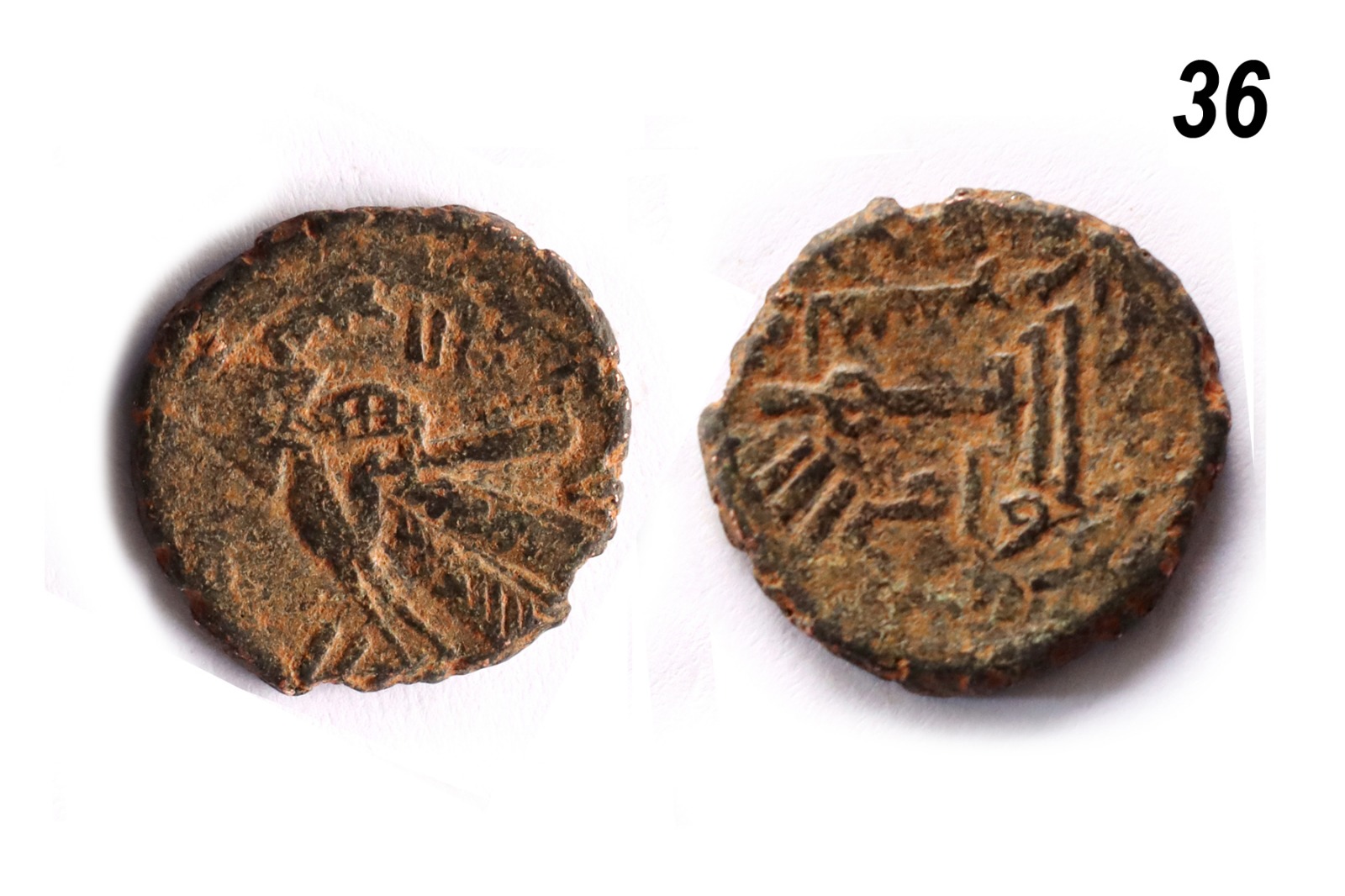
Before the full adoption of Islamic iconography in coinage, the Umayyads issued coins that blended Byzantine elements with Islamic modifications. This bronze fals (4.99g, 17mm) represents an era of economic and political evolution, as Abd al-Malik sought to establish a unified and independent Islamic currency, eventually replacing Byzantine-style coins with purely Arabic inscriptions. - Design and Symbolism
- Obverse: Depicts the caliph standing facing forward, wearing a long robe and holding the pommel of a sword, symbolizing both authority and military strength. A girdle band hangs from his elbow, an element inspired by Byzantine imperial imagery.
- Reverse: Features a transformed cross on three steps, a modified Byzantine Christian symbol. To the left, the inscription “waf” (full value) appears, while on the right, “bi-Qinnasrin” (mint location: Qinnasrin, Syria) is inscribed. This design reflects the gradual adaptation of Byzantine motifs into Islamic monetary culture.
- Physical Characteristics and Minting
This fals was struck using the traditional hammered technique, producing an irregular round shape. Weighing 4.99 grams with a diameter of 17mm, its bronze composition ensured durability for circulation in trade and daily transactions. These coins were essential for local economies and commercial activities across the Umayyad territories. - Monetary Reforms of Abd al-Malik
Abd al-Malik ibn Marwan initiated a monetary reform that led to the complete Arabization of Islamic coinage. The Qinnasrin fals, while still incorporating Byzantine-influenced elements, represents a crucial step toward the creation of purely Islamic designs with Arabic inscriptions, which became the standard for Islamic coinage in later years. - Legacy and Numismatic Significance
This coin is a valuable artifact for numismatists and historians, offering insights into the political, cultural, and economic shifts of early Islamic rule. The blend of Byzantine and Islamic elements in the Qinnasrin fals highlights the strategic approach of the Umayyads in shaping a distinct Islamic identity while maintaining stability in their monetary system.