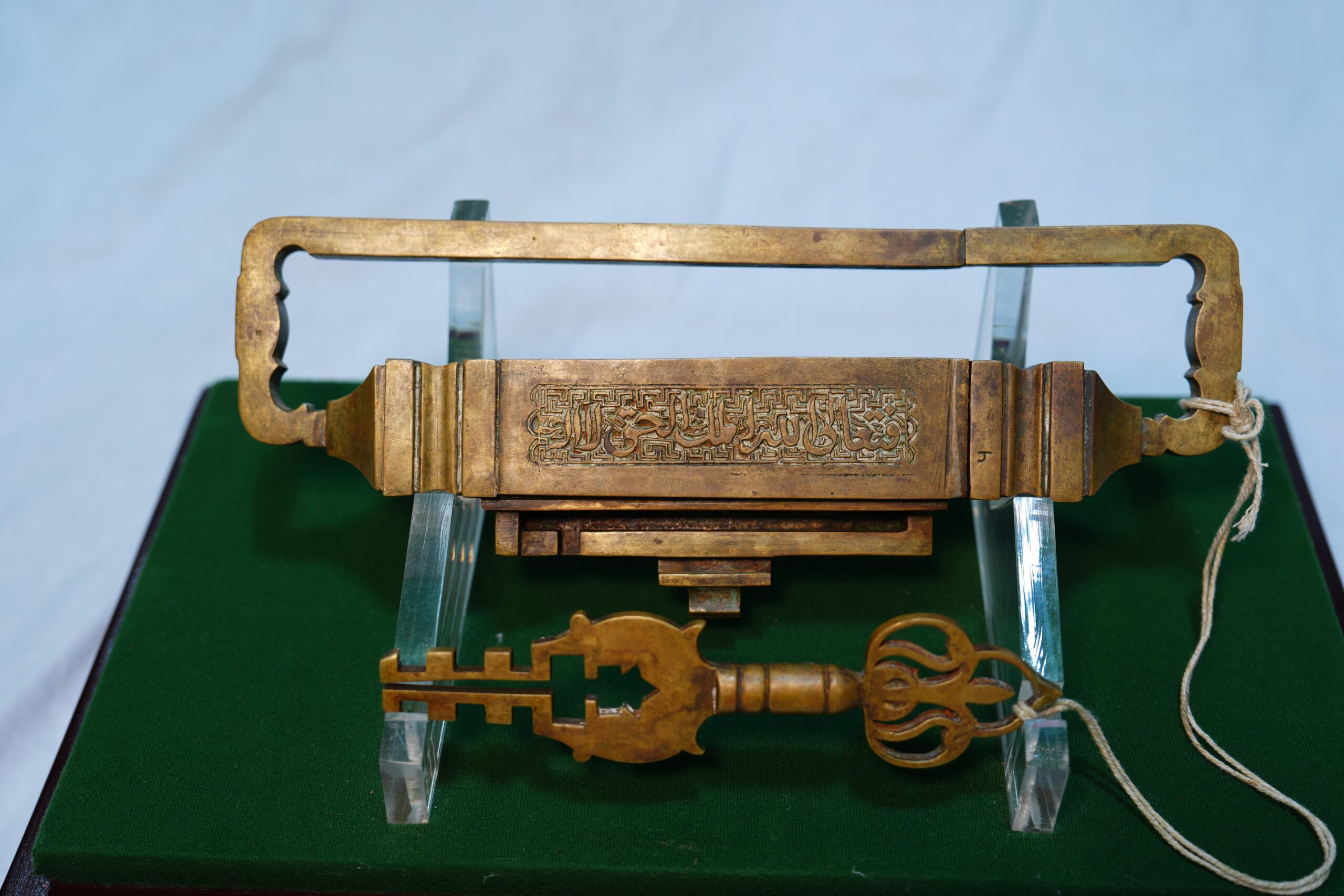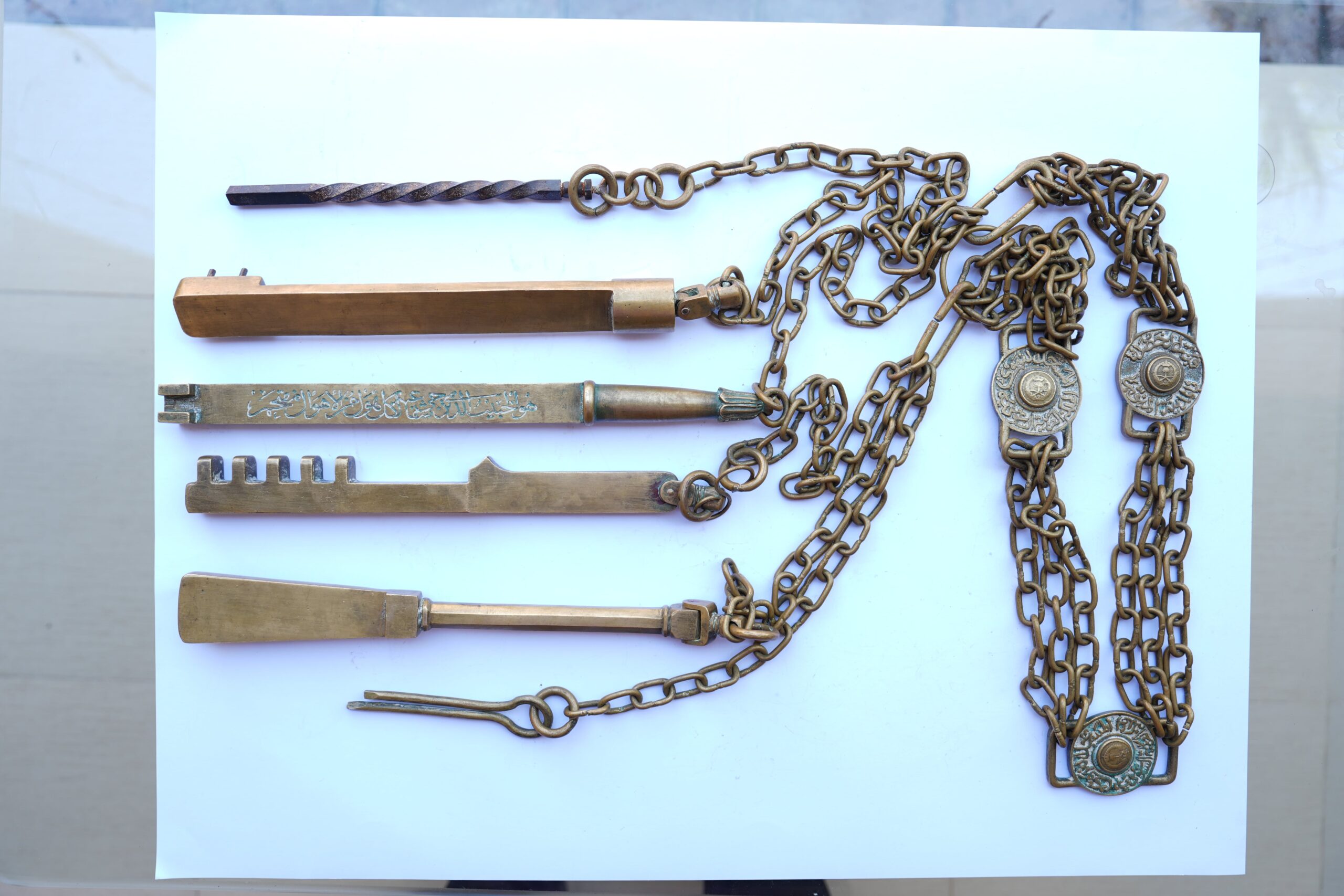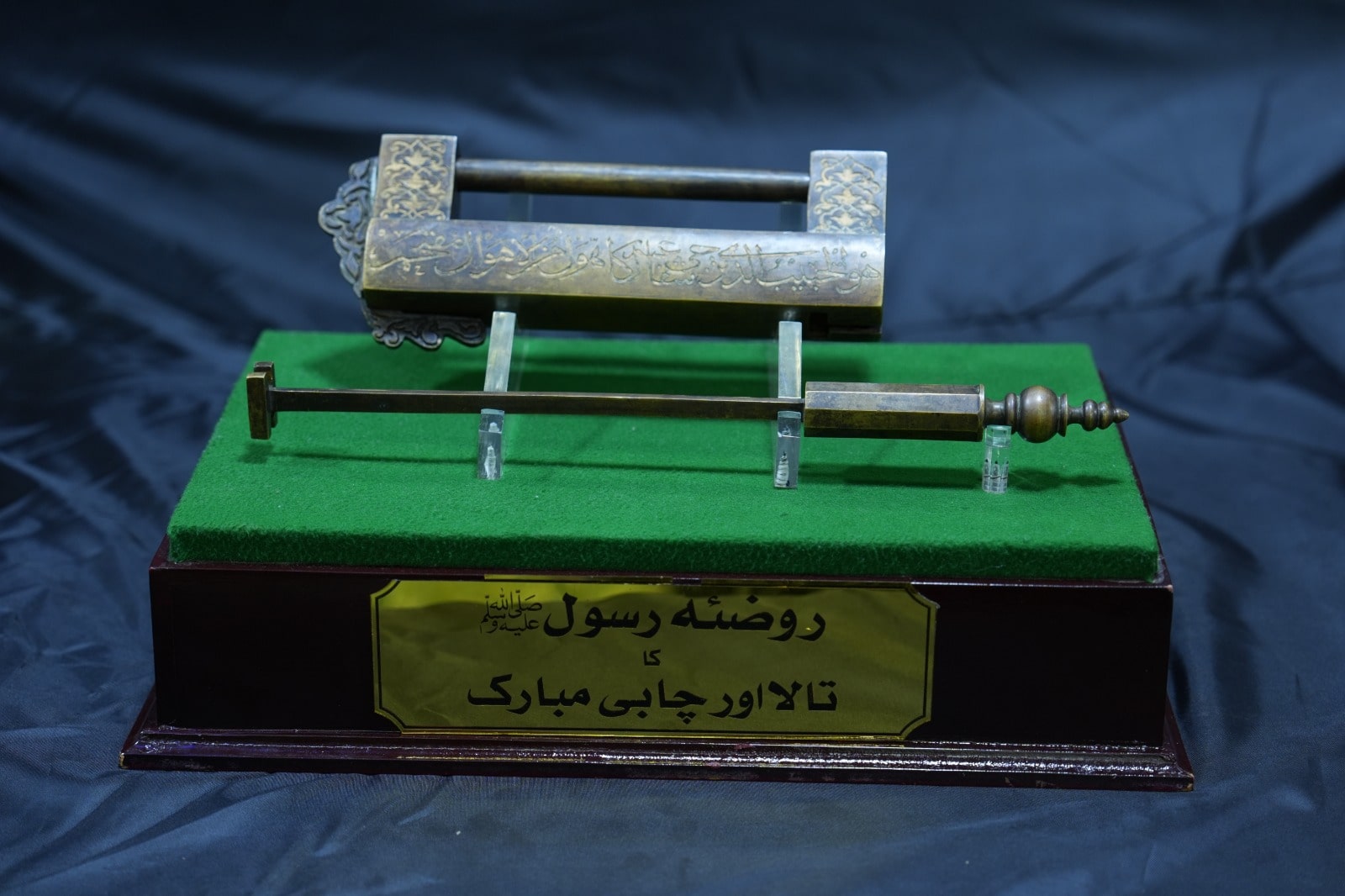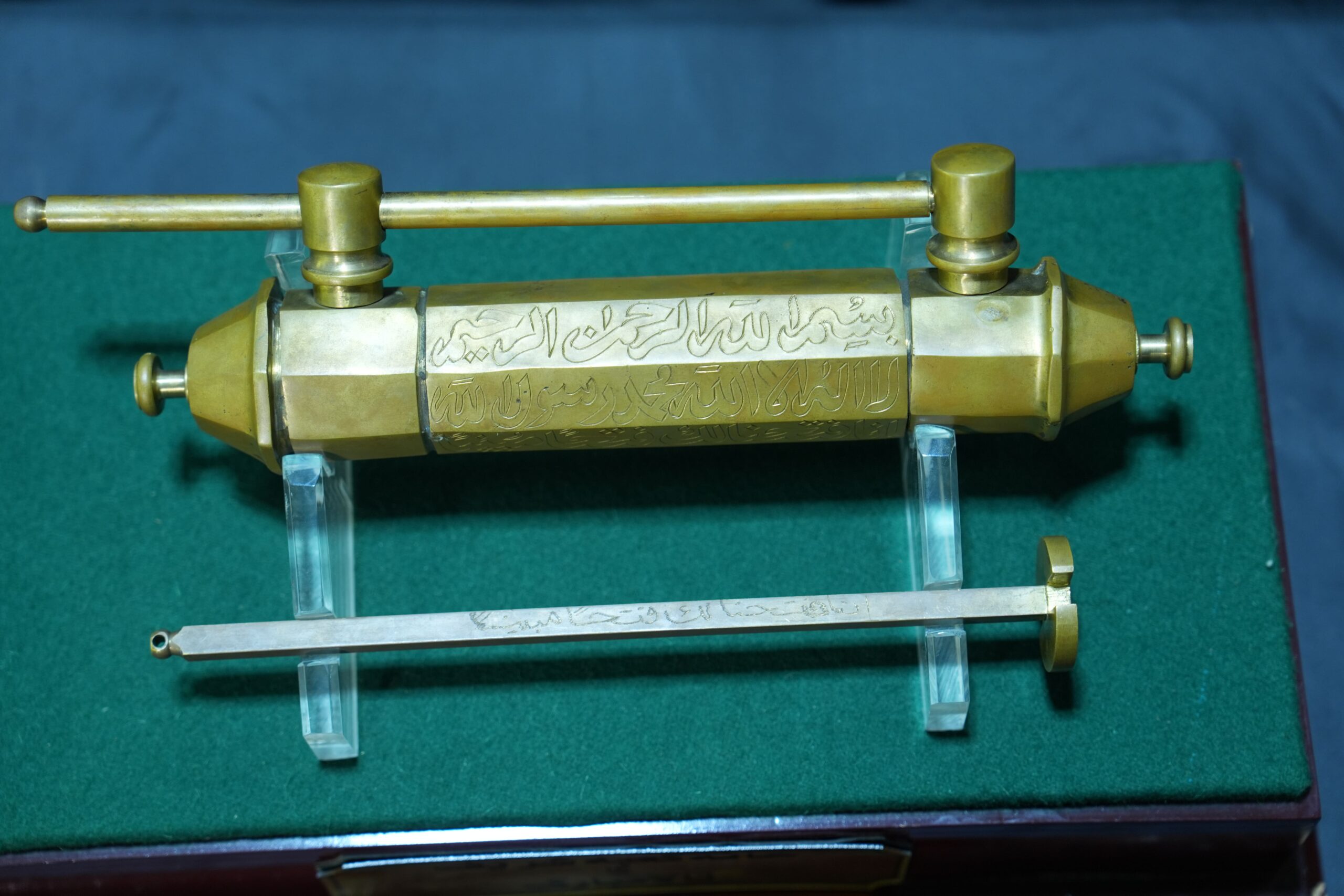
The Holy Star of the Ottoman Caliphate (During the reign of Sultan Mahmud II) – 1241 AH
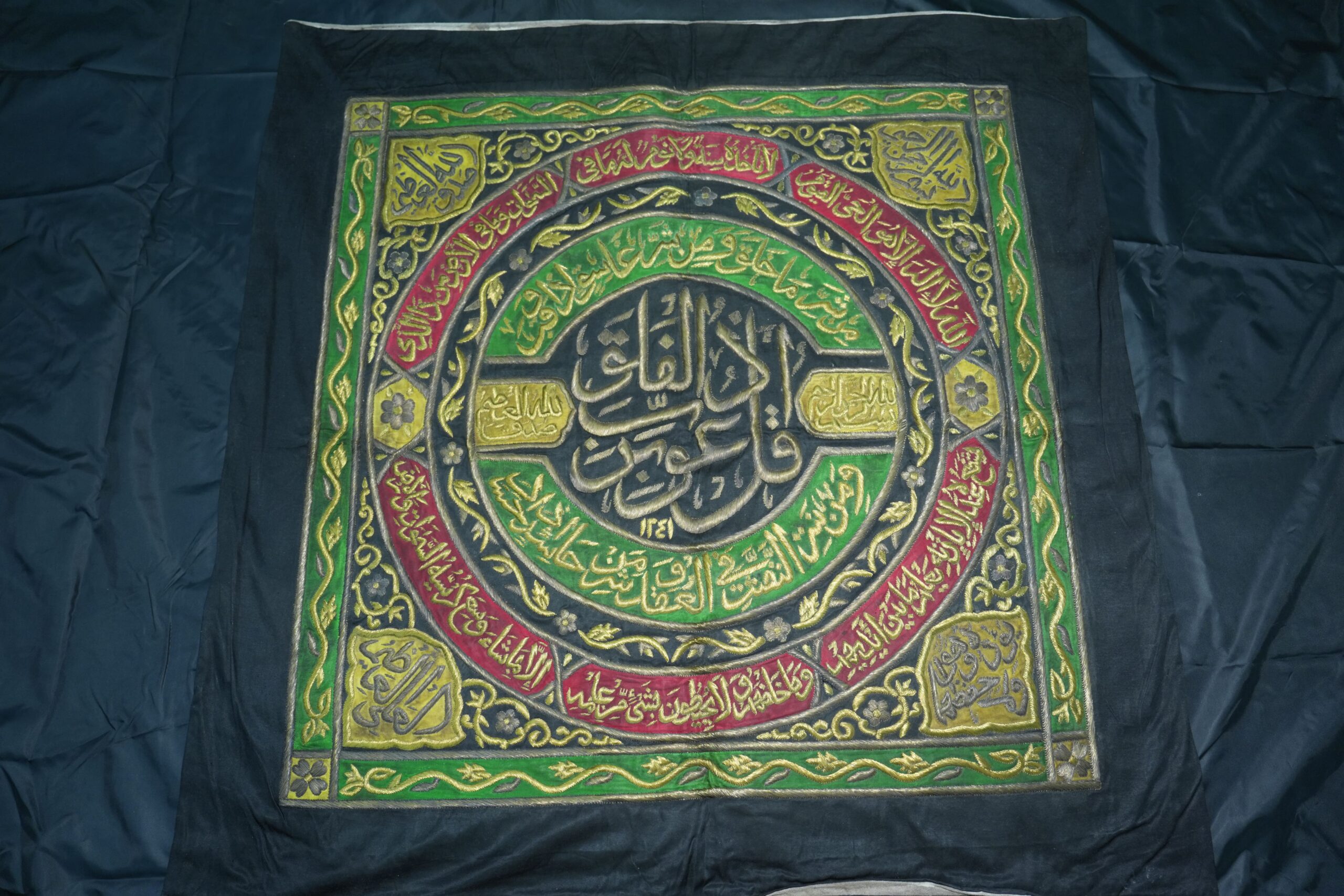
In the year 1241 AH / 1825–1826, the glorious era of the Ottoman Caliphate, during the reign of Sultan Mahmud II, with hearts filled with the love of the Prophet (peace be upon him), unparalleled devotion and deep spiritual attachment, this holy symbol was prepared with great respect, so that it could become part of the relationship, service and adornment of the Holy Shrine of the Prophet (peace be upon him) and be a practical expression of the Ottoman Caliphate’s devotion to Medina.
Detailed Introduction
Date of Preparation: 1241 AH
Preparation: Fine and exquisite gold and silver carving
Order of Preparation: Ottoman Caliphate
Period of the Empire: Sultan Mahmud II, Ottoman Caliphate (early 19th century)
Central Dhikr: Bismillah and sacred Arabic calligraphy
Prominent in the center: Spiritual text and blessed inscription
Around the edges: Quranic verses, blessings and peace and traditional Ottoman admonitions
Engraving: Classical Ottoman spiritual engravings
Colors used: Green, red and gold
Symbolic meaning: Holiness, love for the Prophet (peace be upon him), illumination, dignity and Ottoman royal majesty
Calligraphy: A beautiful combination of Ottoman Thuluth and Diwani calligraphy
Intention of Preparation: To present the Holy Shrine of the Holy Prophet (peace be upon him) by the Ottoman Caliphate with perfect respect and respect
Spiritual description of the Holy Star
This holy Ottoman blessing, 1241 AH It was prepared with great sincerity, love and literature during the reign of Sultan Mahmud II of the Ottoman Caliphate. The exquisite carvings of gold and silver, the charming harmony of green and red colors, and the Quranic and blessed inscriptions give it a special spiritual dignity.
The spiritual inscription inscribed in the very center of this sacred star and the inscriptions in the form of a circle around it bear witness to the fact that this blessing is not just a work of art but a living and bright expression of the Ottoman Caliphate’s love for the Prophet (peace be upon him).
The green color symbolizes the relationship with Medina, peace of heart and life of the soul, the red color shows love, sacrifice and deep devotion, while the golden color represents the light of the Prophet (peace be upon him), glory and the glory and splendor of the Ottoman Caliphate.
This sacred symbol remained hanging on the Holy Shrine of the Prophet (peace be upon him) for a long time during the Ottoman Caliphate, where it preserved countless blessed moments of the relationship with Medina. Later, it was kept with great respect for some time in the Hejaz Museum, Madinah, where it was preserved as a valuable spiritual symbol of the Ottoman era.
From there, this spiritual trust was received by the spiritual healer Pir Usman Ghani Sahib. Today, this sacred Ottoman Tabrak Tabrakat Museum, Qaimpur, Bahawalpur District, where it has become a means of pilgrimage, spiritual peace and reminiscence of the Ottoman Caliphate and Madinah for the lovers of the Prophet (peace be upon him), and it silently draws the heart of every viewer towards Madinah.