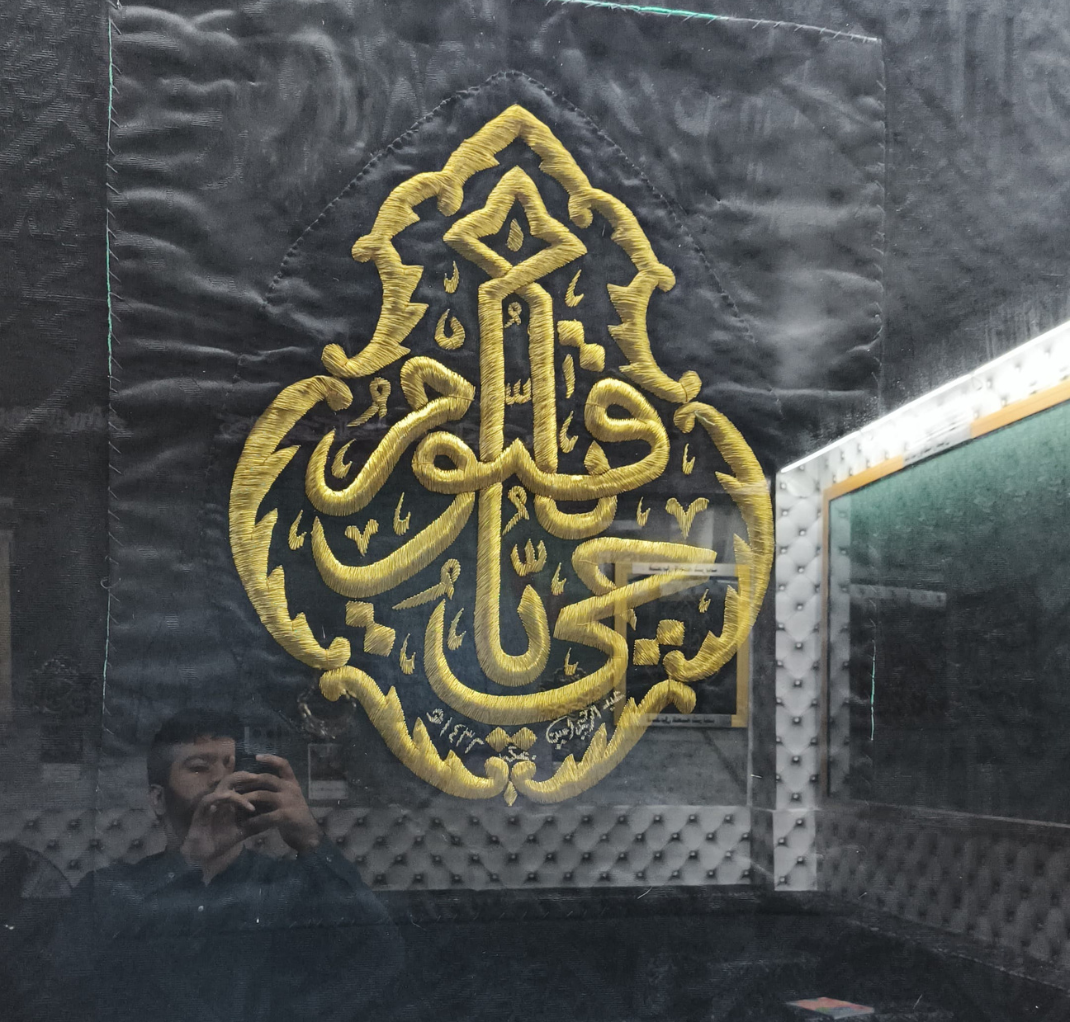
The Ghilaf-e-Kaaba, also known as the Kiswah, holds a profound spiritual significance for Muslims worldwide. It is the cloth that adorns the Kaaba, the holiest site in Islam, situated in the Masjid al-Haram, Makkah. This particular piece, inscribed with the names of Allah “Ya Hayyu Ya Qayyum,” was part of the Ghilaf used in the year 1432H (2011 CE). Crafted by the skilled artist Abdur Raheem Ameen, this fragment represents a blend of devotion, artistry, and Islamic heritage.
Historical Context
The tradition of covering the Kaaba with a decorated cloth dates back centuries, with its roots in the pre-Islamic era. However, the custom gained its current form during the Abbasid period and has since been maintained with reverence. The Kiswah is replaced annually on the 9th of Dhul-Hijjah, the day of Arafah, symbolizing renewal and purity. This piece from 1432H is a testimony to this enduring tradition.
Artistry and Design
The Ghilaf is meticulously crafted using silk threads and embroidered with gold and silver. This piece features the sacred names of Allah, “Ya Hayyu Ya Qayyum,” symbolizing the eternal and self-sustaining attributes of the Almighty. The inscription is a reflection of Islamic calligraphy, a revered art form that celebrates the divine through intricate designs.
Significance of Ya Hayyu Ya Qayyum
“Ya Hayyu” means “O Ever-Living,” and “Ya Qayyum” means “O Self-Sustaining.” These names signify Allah’s eternal existence and His power to sustain all creation. Inscribing these names on the Kiswah serves as a reminder of the divine presence and the sanctity of the Kaaba.
Creator’s Contribution
Abdur Raheem Ameen, a renowned craftsman, played a pivotal role in creating this piece of the Ghilaf. His dedication to preserving Islamic traditions through his artistry is evident in the intricate detailing and the spiritual essence captured in this fragment. His work embodies the legacy of countless artisans who have contributed to this sacred cloth over the years.
Preservation and Display
This piece of the Ghilaf from 1432H is preserved as a historical artifact. It serves as a bridge between the past and present, reminding the ummah of the significance of their shared heritage. Displaying such pieces in museums allows visitors to connect with the spiritual and cultural history of Islam, inspiring reverence and reflection.