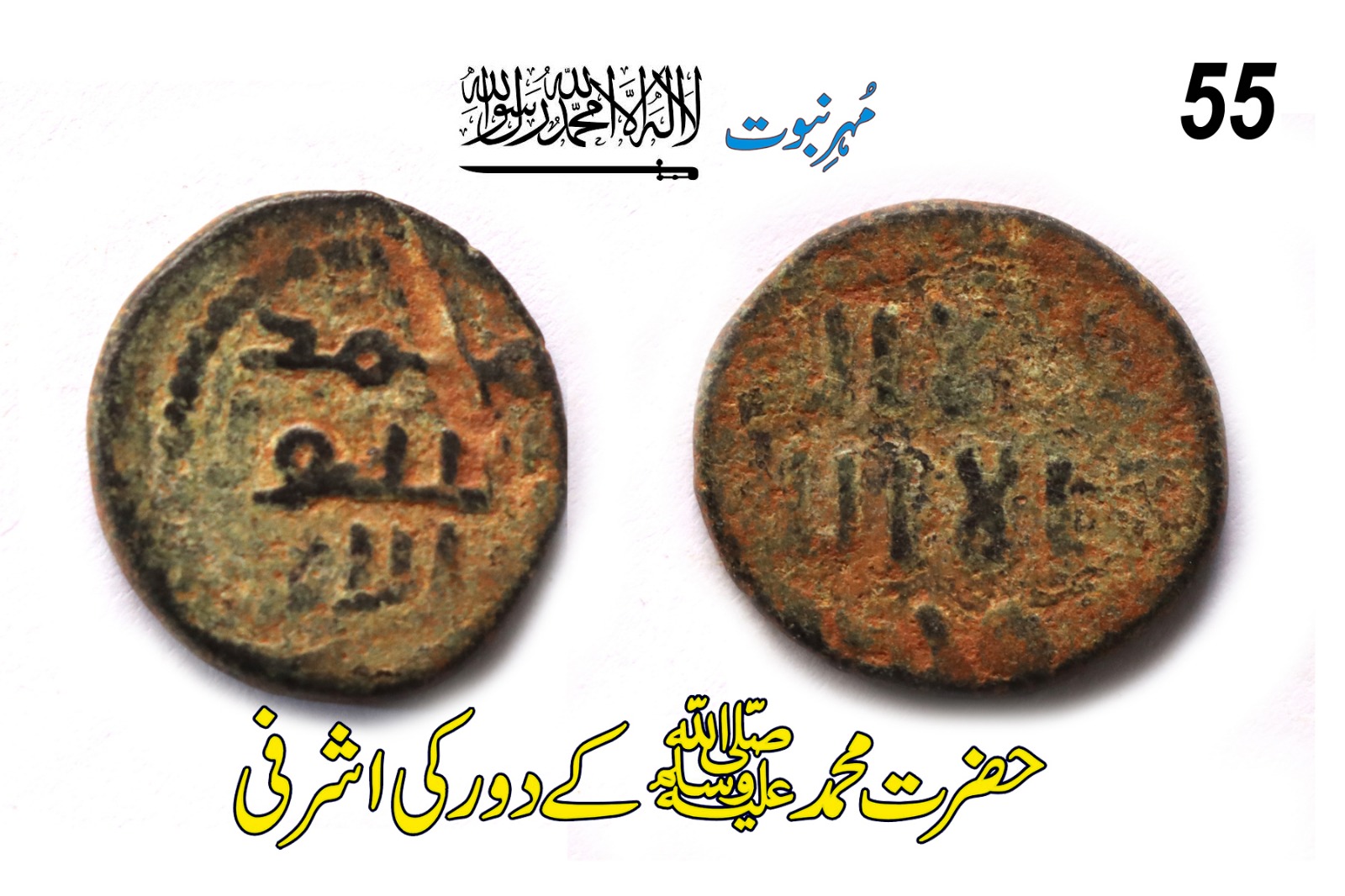
The Islamic copper coin (HCR10404), dating from approximately 77-137 AH (696-755 AD), is a remarkable artifact from the early Islamic period. It is struck using copper, a commonly used material for early Islamic coinage. The coin features prominent Arabic inscriptions, including the Shahada (declaration of faith) and the name of the Prophet Muhammad (PBUH), both enclosed by pointillate circles. The use of Arabic calligraphy and geometric design represents the religious and cultural influence of Islam during its formative years.
Coin Specifications
- Denomination: Islamic Copper Coin
- Material: Copper
- Techniques: Struck
- Reference: HCR10404
- Date: Circa 77-137 AH (696-755 AD)
Obverse Design and Inscriptions
The obverse side of the coin bears the Shahada, the central declaration of Islamic faith:
Inscription:
“لا اله الا الله و حده”
(Translation: “There is no god but Allah, He is One.”)
- The Shahada represents the core principle of Islam—Tawhid (the Oneness of God).
- The Arabic inscription is clearly written across the central field of the coin, emphasizing the monotheistic belief central to Islam.
- The inscription is enclosed by a pointillate (dotted) circle, which is a distinctive feature in early Islamic coinage, reflecting the Islamic avoidance of human or animal imagery.
Reverse Design and Inscriptions
The reverse side of the coin features another significant inscription:
Inscription:
“محمد رسول الله”
(Translation: “Muhammad is the Messenger of Allah.”)
- This inscription acknowledges the Prophet Muhammad (PBUH) as the final messenger of Islam, reinforcing his central role in Islamic faith.
- Similar to the obverse, the inscription is enclosed by a pointillate circle, maintaining a uniform aesthetic and geometric design that was prevalent in early Islamic coins.
Material and Technique
The coin is made of copper, a common metal used in early Islamic coinage. Copper was abundant and cost-effective, making it ideal for currency in the growing Islamic empire.
- The coin was struck using a traditional minting process, where metal is pressed into a die to create a design.
- The struck technique ensures that the inscriptions and designs are deeply embossed, making them visible and durable over time.
Religious and Historical Significance
This coin holds significant religious and historical importance as it reflects the early Islamic expansion and the establishment of Islamic governance.
- The Shahada and name of the Prophet Muhammad (PBUH) emphasize the religious messages that were integral to the identity of the new Muslim empire.
- Coins like this were used to communicate religious teachings to a broad population, helping to spread Islam across newly conquered territories.
- The absence of figural representations and focus on calligraphy and geometric designs reflects the Islamic preference for non-representational art in religious contexts.
Artistic and Numismatic Importance
The design of the coin reflects the artistic principles that guided Islamic numismatics during the early centuries of Islam.
- Arabic calligraphy became a dominant feature in Islamic art, and coins were an important medium for the expression of these artistic elements.
- The use of geometric patterns, such as the pointillate circle, emphasizes symmetry and balance, key features of Islamic art and design.
- The absence of imagery is consistent with the Islamic belief in avoiding the depiction of living beings, especially in sacred contexts.
Rarity and Collectability
This HCR10404 coin is highly collectible due to its clear inscriptions and well-preserved condition, making it a valuable piece for collectors and numismatists.
- Coins like this one provide insight into early Islamic history and are prized for their historical significance and artistic value.
- The symbolism of the Shahada and the Prophet’s name on the coin make it an important artifact for those studying the spread of Islam and its influence on culture and society.