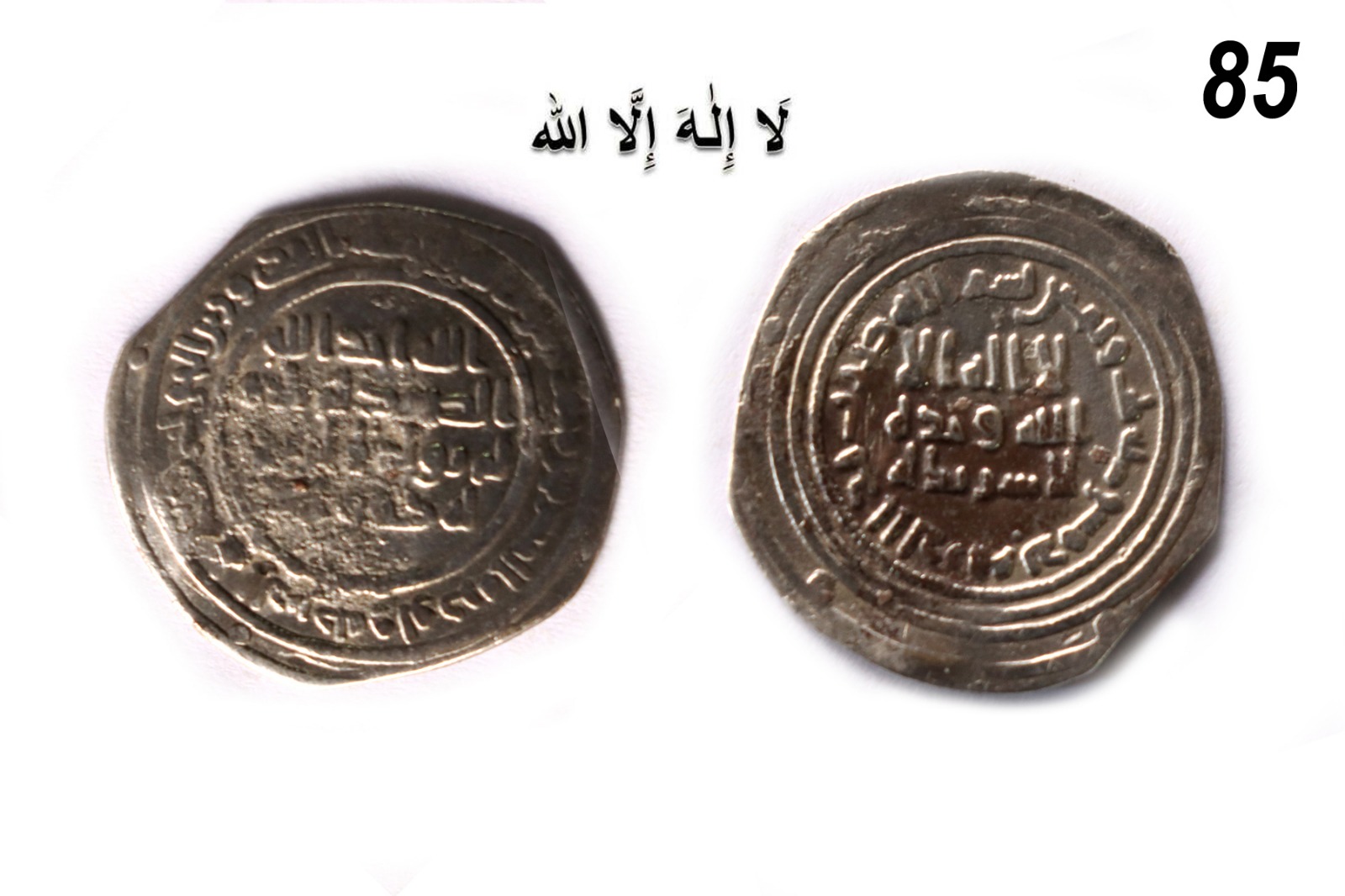
This Umayyad silver dirham, minted in AH 79 (AD 698-699) at the Mah al-Basra mint, represents a crucial period in early Islamic coinage history. The coin, weighing 2.71 grams with a diameter of 27.4mm, follows the standard weight and size of Umayyad silver currency. Despite its porous surfaces, it remains in Good Very Fine (VF) condition, preserving its detailed inscriptions and historical significance.
Historical Significance of the Umayyad Dirham
During the reign of Caliph Abd al-Malik ibn Marwan (r. 685-705 AD), a monetary reform was introduced, standardizing Islamic coinage by removing images and replacing them with Islamic inscriptions. This reform aimed to establish a distinct Islamic identity in currency and reduce reliance on Byzantine and Sassanian coinage. This dirham is an example of those reformed coins, demonstrating the transition from earlier Sassanian-style Islamic coins to a fully Islamic monetary system.
Design and Inscriptions
The AR Dirham follows the classical Umayyad style, featuring Arabic inscriptions on both sides:
- Obverse (Front): The Shahada (Islamic declaration of faith), proclaiming the oneness of Allah and the prophethood of Muhammad.
- Reverse (Back): Quranic verses, the mint name (Mah al-Basra), and the Islamic Hijri date (79 AH).
This design ensured the Islamic character of the coin while maintaining a functional and standardized monetary system.
Mah al-Basra Mint – A Strategic Coinage Center
Mah al-Basra, located in present-day Iraq, was an important economic and military hub of the Umayyad Caliphate. It played a key role in minting silver dirhams used in trade, taxation, and administration across the vast empire. Coins minted in Basra were widely circulated and are considered historically significant due to their high silver content and precision in design.
Numismatic Value and Collectability
Coins from AH 79 (AD 698-699) mark an essential phase in Islamic numismatics, making them highly sought after by collectors, historians, and researchers. Despite the porous surfaces, this coin’s Good VF (Very Fine) condition ensures that its inscriptions remain legible, adding to its numismatic value.
Legacy and Preservation
This silver dirham is more than just a piece of currency; it is a historical artifact that offers insights into early Islamic governance, trade, and economic policies. Preserved in various numismatic collections, it continues to serve as a testament to the evolution of Islamic coinage and monetary reforms.