Expansion of Islam into India: Discovery of a New Mint
Starting Price: 150,000.00 CHF
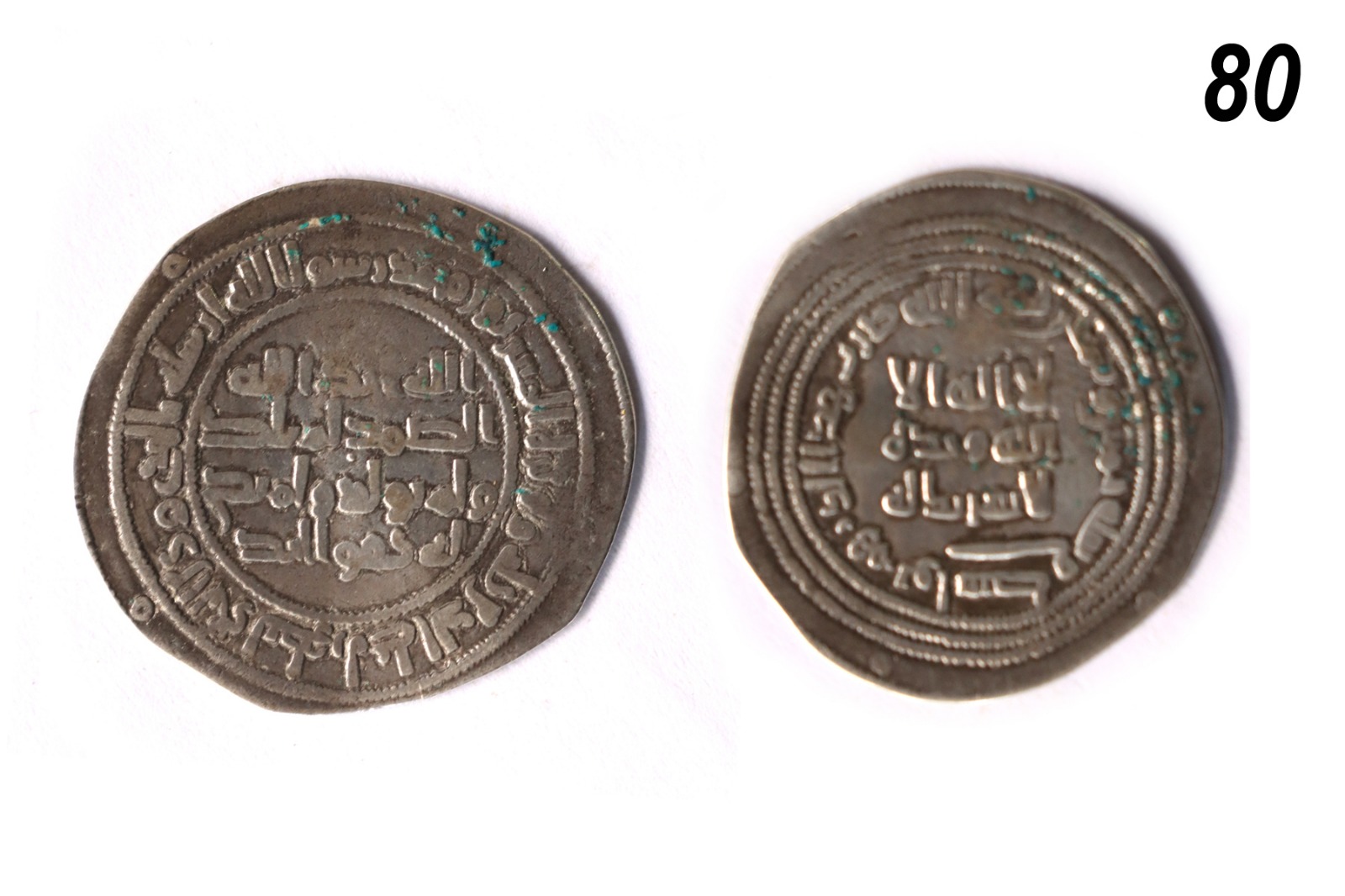
Sulayman, AH 96-99 (715-717) – Dirham AH 97 (715-16), al-Hind
A central inscription in three lines, surrounded by a circular legend / A central inscription in four lines, surrounded by a circular legend. Weight: 2.85g.
One of the most important Umayyad coins in the world. A very fine specimen.
Historical Background
Hearing about the pirate activities emerging from the port town of al-Daybul on the Sindh coast, the Viceroy of the East, al-Hajjaj bin Yusuf, ordered his son-in-law, the Umayyad general Muhammad bin al-Qasim al-Thaqafi, to address the issue. Muhammad, who was a protégé of both al-Hajjaj and the Umayyad Caliph al-Walid I, launched a carefully planned military campaign that advanced by both land and sea, successfully capturing al-Daybul in AH 92 (711-712).
Because he showed clemency towards the Hindu population, the town became a center of intercommunal harmony and a hub for Muslim expansion. The earliest recorded Umayyad dirham from the Indian subcontinent, likely minted as tribute, dates back to al-Daybul in AH 95 (714 CE). This was the year al-Hajjaj passed away, and the following year (AH 96), Caliph al-Walid also died, leading to the succession of his brother, Caliph Sulayman. As was customary, officials of the previous regime were dismissed, and new provincial governors were appointed.
Among them was Habib bin al-Muhallab bin Abi Sufra, who served as governor of Hind and Sind from AH 96 to 99. He was later removed by Caliph ‘Umar II bin ‘Abd al-‘Aziz. Habib was the younger brother of Yazid, a close associate of Sulayman, who served as governor in several provinces, including Khurasan (AH 97-99). Their father, al-Muhallab, was a well-known Umayyad general who played a key role in defeating the Kharijite leader al-Qatari bin al-Fuja’a.
It was during Habib’s tenure that this coin was minted, bearing the territorial name “al-Hind”, which generally referred to regions east of the Indus River. Unlike standard Umayyad coins that bore the name of a specific minting city, the term “al-Hind” was used similarly to how all Umayyad coinage in Spain carried the “al-Andalus” inscription, despite being issued from Cordoba. Since “al-Hind” needed to be distinguished from al-Daybul, it is believed that this coin was minted farther north, possibly in Multan, a city famous for its wealth.
The high quality of execution suggests that the dies for this coin were not prepared locally. Instead, they were likely crafted in a major minting center such as Wasit, the main eastern mint of the Umayyad Caliphate. These coins were possibly made as tribute for dispatch to the central Umayyad treasury in Wasit or Damascus. As a result, this coin stands as an eloquent testament to the dynamic expansion of Islam into the far reaches of the Indian subcontinent.