1. Introduction to the Abbasid Caliphate and Al-Amin’s Reign
The Abbasid Caliphate, one of the most influential Islamic empires, spanned from 750 to 1258 AD. Al-Amin, the son of Caliph Harun al-Rashid, ruled as the seventh Abbasid Caliph from 193 to 198 AH (809–813 AD). His reign was marked by internal conflicts and power struggles, most notably with his brother Al-Ma’mun. Despite political unrest, the Abbasid period is celebrated for its advancements in culture, science, and governance.
2. Minting of Abbasid Dirhams in Herat
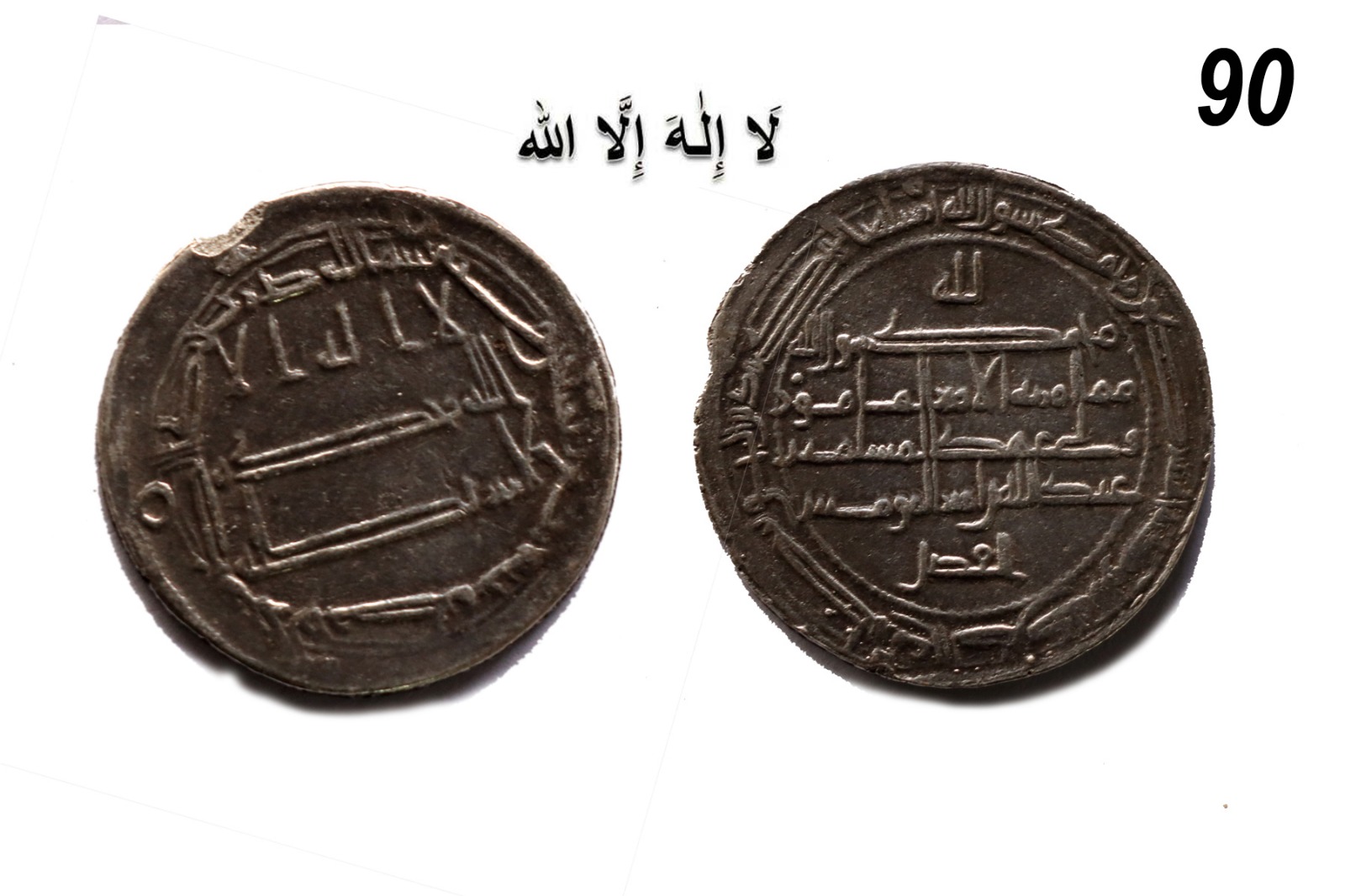
Herat, an important city in the Abbasid Empire, was known for its contributions to Islamic art, culture, and trade. The minting of coins in Herat during Al-Amin’s reign reflected the city’s economic significance. This silver dirham, dated 194 AH, was produced with remarkable craftsmanship, highlighting the artistic excellence and economic prosperity of the era.
3. The Inscription and Islamic Declaration of Faith
The dirham features the Islamic declaration of faith, “لا إله إلا الله محمد رسول الله” (There is no god but Allah, and Muhammad is the Messenger of Allah). This inscription not only reflects the religious identity of the Abbasid Caliphate but also emphasizes the caliph’s role as a protector of Islam. Coins like these served as tools for spreading Islamic beliefs and uniting the diverse territories under a common faith.
4. The Mention of Al-Ma’mun on Al-Amin’s Coin
Interestingly, this dirham bears the name of Al-Amin’s brother, Al-Ma’mun. During this period, Al-Amin and Al-Ma’mun were engaged in a power struggle over succession. The inclusion of Al-Ma’mun’s name on the coin reflects the political dynamics of the time, showcasing a temporary acknowledgment of his role within the Abbasid leadership structure.
5. Kufic Script and Artistic Features
The dirham is inscribed in Kufic script, an early and highly regarded form of Arabic calligraphy. The intricate design, coupled with the precise lettering, demonstrates the artistic sophistication of the Abbasid era. The coin’s dual-sided inscriptions, showcasing the name of Allah, the Caliph, and Al-Ma’mun, reflect the meticulous attention to detail in Islamic coinage.
6. Historical and Cultural Significance
This silver dirham serves as a tangible piece of history, offering insights into the political, religious, and artistic aspects of the Abbasid Caliphate. It not only symbolizes the economic systems of the time but also acts as a historical record of Al-Amin’s brief yet eventful reign. Such coins are valuable for historians and collectors alike, preserving the legacy of one of the most dynamic periods in Islamic history.