Introduction
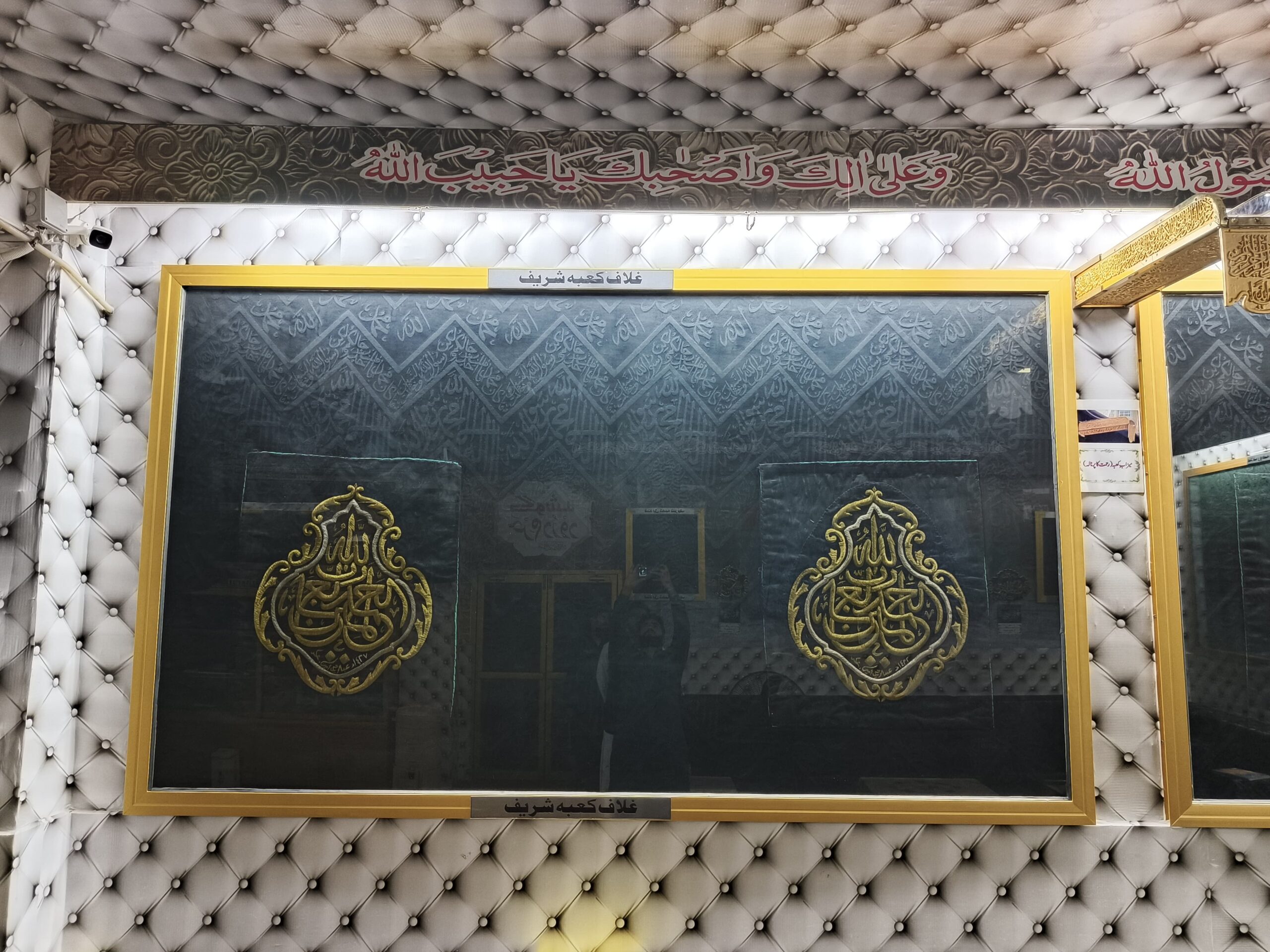
The Ghilaf-e-Kaaba, also known as the “Kiswah,” is a sacred cloth that envelops the Kaaba, the holiest site in Islam, located in Masjid al-Haram, Makkah. This cloth is changed annually, symbolizing the spiritual connection between Muslims and the Kaaba. The two pieces mentioned here, Al-Hamdulillah Hi Rabil Alamin 1432 and Al-Hamdulillah Hi Rabil Alamin 1427, are parts of the Ghilaf created by Abdur Raheem Ameen, a skilled artisan known for his intricate work.
Historical Significance
The practice of covering the Kaaba with a special cloth has been an important tradition since pre-Islamic times and continues today as part of Islamic heritage. Each year, the new Ghilaf is designed with intricate Quranic inscriptions, serving as a reflection of the Islamic world’s devotion and craftsmanship. These pieces of the Ghilaf were used in the years 1432 Hijri (2011 CE) and 1427 Hijri (2006 CE), marking significant years in the history of the Kaaba’s sanctification.
Details of the Artifact
- Names:
- Al-Hamdulillah Hi Rabil Alamin 1432
- Al-Hamdulillah Hi Rabil Alamin 1427
- Creator: Abdur Raheem Ameen
- Material: Silk fabric adorned with gold and silver thread.
- Design: The Ghilaf features Quranic verses embroidered in delicate Thuluth script, including the famous verse “Al-Hamdulillah Hi Rabil Alamin” (“All praise is due to Allah, the Lord of the Worlds”). This phrase represents the reverence Muslims hold for their Creator.
Symbolism of the Ghilaf
The Ghilaf is not only a physical covering but also a symbolic gesture of the honor and respect Muslims have for the House of Allah. The annual change of the Ghilaf is an essential part of the Hajj pilgrimage, with the new cloth being draped over the Kaaba as part of a special ceremony. The phrase “Al-Hamdulillah Hi Rabil Alamin,” featured on these pieces, signifies gratitude to Allah for His countless blessings.
Artisan’s Contribution
Abdur Raheem Ameen, a renowned craftsman, was responsible for the creation of the 1432 and 1427 Hijri Ghilaf pieces. His expertise in embroidery and calligraphy contributed to the creation of these beautiful and sacred pieces. The intricate design, incorporating Islamic calligraphy and spiritual symbols, showcases the high level of craftsmanship and attention to detail that goes into making the Ghilaf.
Legacy and Preservation
Fragments like these, which once draped the Kaaba, are highly revered and preserved as precious artifacts. They serve as tangible reminders of the sanctity of the Kaaba and the Islamic tradition of honoring the sacred site. These pieces are valuable not only for their artistic value but also for their spiritual significance, connecting the present generation to the rich heritage of Islam.